Post Declaration of Independence
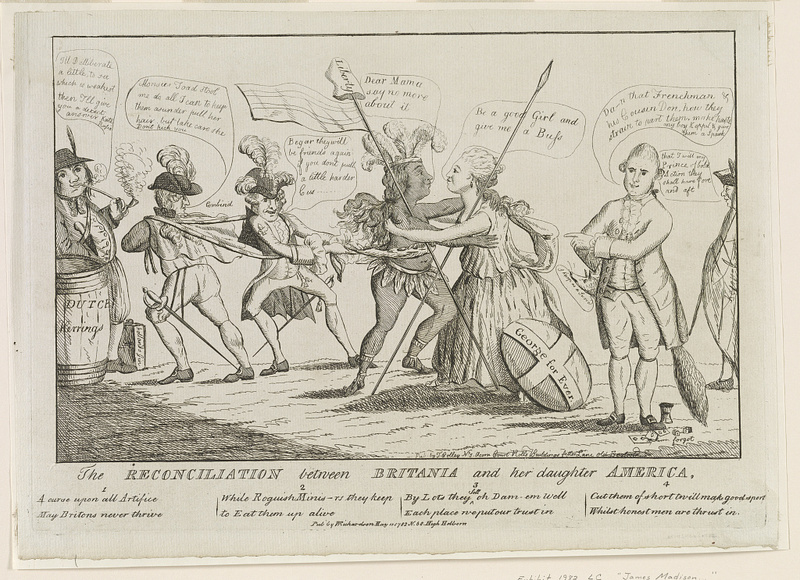
The adoption of the Declaration of Independence on July 4, 1776, solidified the unification of the thirteen American colonies. Although Britain did not recognize their sovereignty until the Treaty of Paris was signed on September 3, 1783, when the American Revolutionary war was officially ended.
Prior to the treaty, Britain was still hopeful in maintaining control over the colonies. In this image, a Native American (America) holds a flag on one hand and a staff with a liberty cap on the other. The figure is shown reaching out to embrace Great Britain. A shield inscribed with “George for Ever” leans against her. A Spaniard and a Frenchman attempt to pull America away.
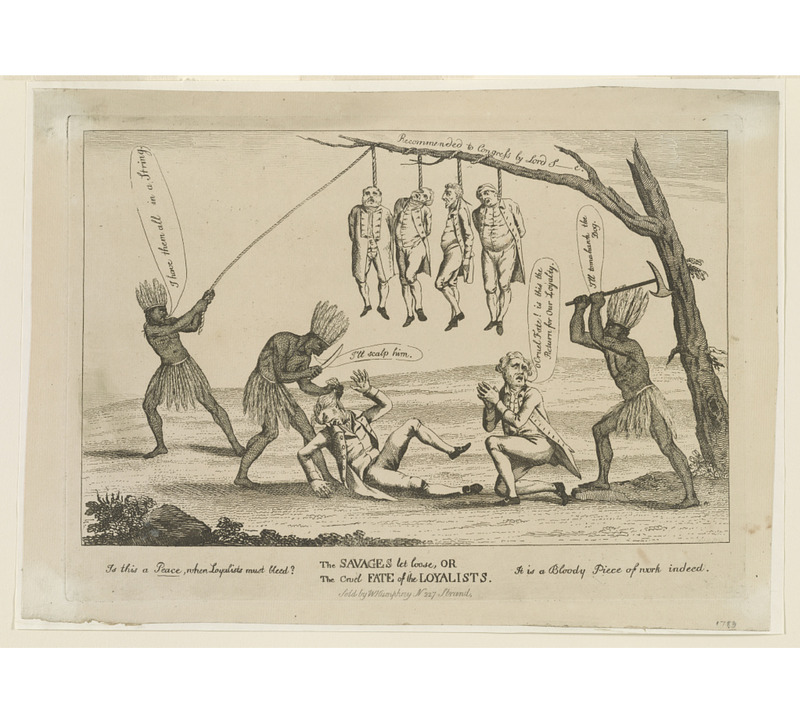
The American Revolution was concluded by the Treaty of Paris in 1783. American colonies were finally able to celebrate their independence from Great Britain. The question remained. What would happen to British loyalists still residing within the newly independent colonies? British propaganda often depicted American colonists as cold-blooded savages seeking vengeance against those who remained loyal to the crown.
In the above political cartoon, a group of Native Americans (American colonists) hang, scalp, and axe a group of British loyalists.
Striving to gain support, while simultaneously generating disillusion against the sovereign United States, the British government often painted Americans in a bad light.