Pre Declaration of Independence
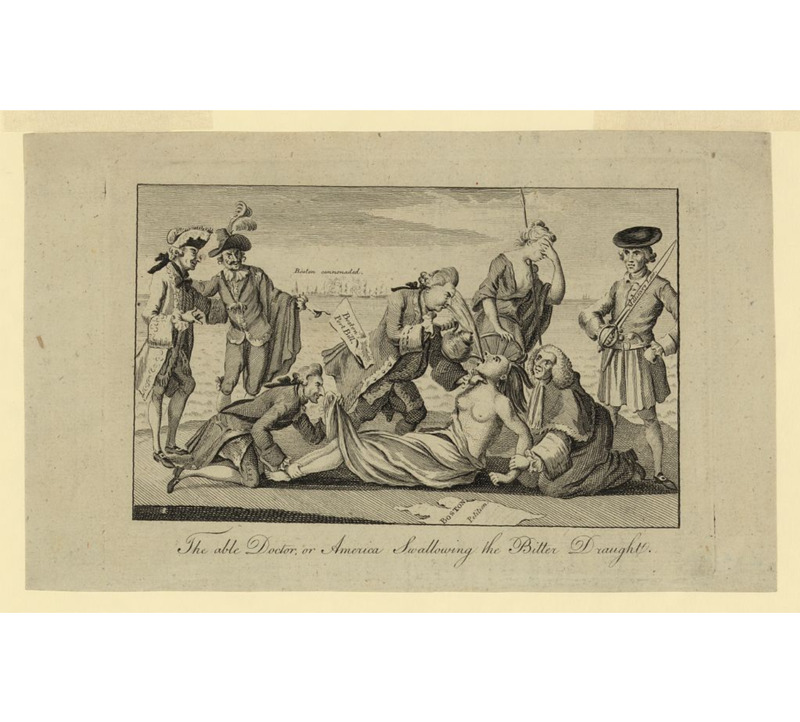
To punish colonists after the Boston Tea Party on December 16, 1773, the Intolerable Acts, as they were typically referred to by American colonists, were passed by British Parliament in 1774. Attempting to maintain control over U.S. colonies, Britain passed the Boston Port Act, the Massachusetts Government Act, the Administration of Justice Act, and the Quartering Act. These laws made up the Coercive Acts of 1774 (Intolerable Acts).
In this illustration, members of British Parliament force tea (the Intolerable Acts) down a Native American woman’s throat. The Native American, as will prove common amongst early American illustrations, represents “America.” Britain is represented by another woman standing behind. She looks away and covers her face with her left hand.
The Boston Port Bill (Boston Port Act) extends from one of the members pockets. Passed in 1774, this law closed the Boston Harbor from all trade and commerce. Citizens found themselves forced to pay a fine for the tea that was thrown into the Boston Harbor the previous year.
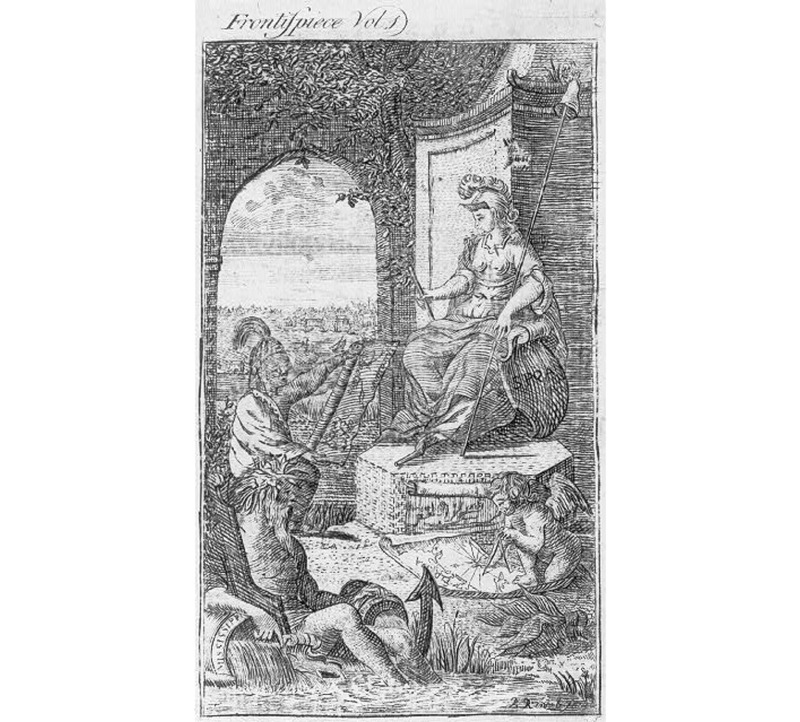
The American Revolution officially began on April 19, 1775, at the Battles of Lexington and Concord. American colonists had openly defied the British government and established their ambitions for sovereignty and independence.
In this illustration, a kneeling Native American individual hands over a map to a woman who sits on a throne (liberty). The woman holds a staff topped off with a liberty cap. An angel sits at the base of the throne and draws on a different map. Tabacco leaves, Neptune, and a water drainage system labeled “Mississippi” are also visible towards the bottom of the image.
Eager to achieve freedom from Great Britain, power and control over American land and water systems, independence and sovereignity could be achieved through Native American displacement. Westward expansion for the economic growth of the newly forming nation was vital. The American Revolution not only sought to attain autonomy from the British crown. Colonists also wanted authority over Native peoples’ land.
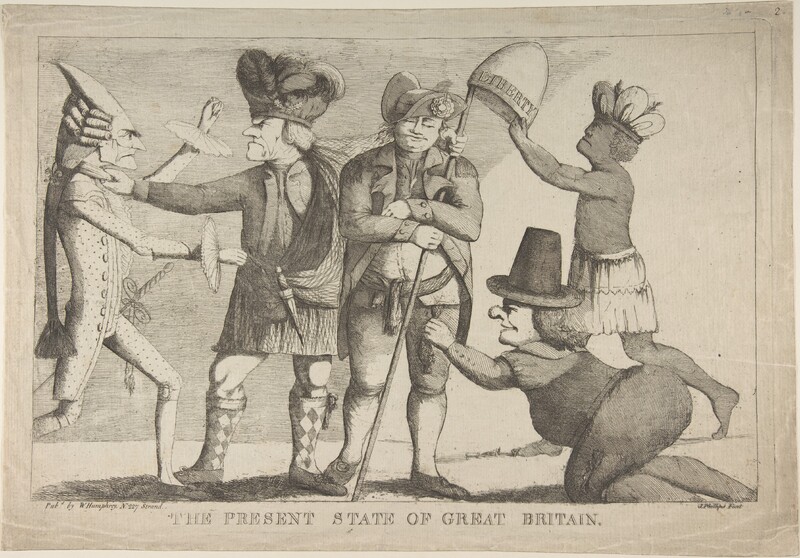
In this illustration a British colonist dozes off while holding a long staff topped off with a liberty cap. A pilgrim and a Native American on his right-side steal from him. A Scotsman and a Frenchman fight on his left.
Demonstrating an attack on all sides by various nations, lets focus in on the Native American. The American Revolution was a fight for independence against the British government. In this print, the British colonist represents Great Britain, and the Native individual represents “America.” The Native American removes the liberty cap from atop the staff that's being held by the colonist. In this image, the Native American represents the American colonies fight for freedom.